
Construction Pipeline Management Software for Forecasting & Reporting
Which pipeline construction software offers forecasting and reporting features?
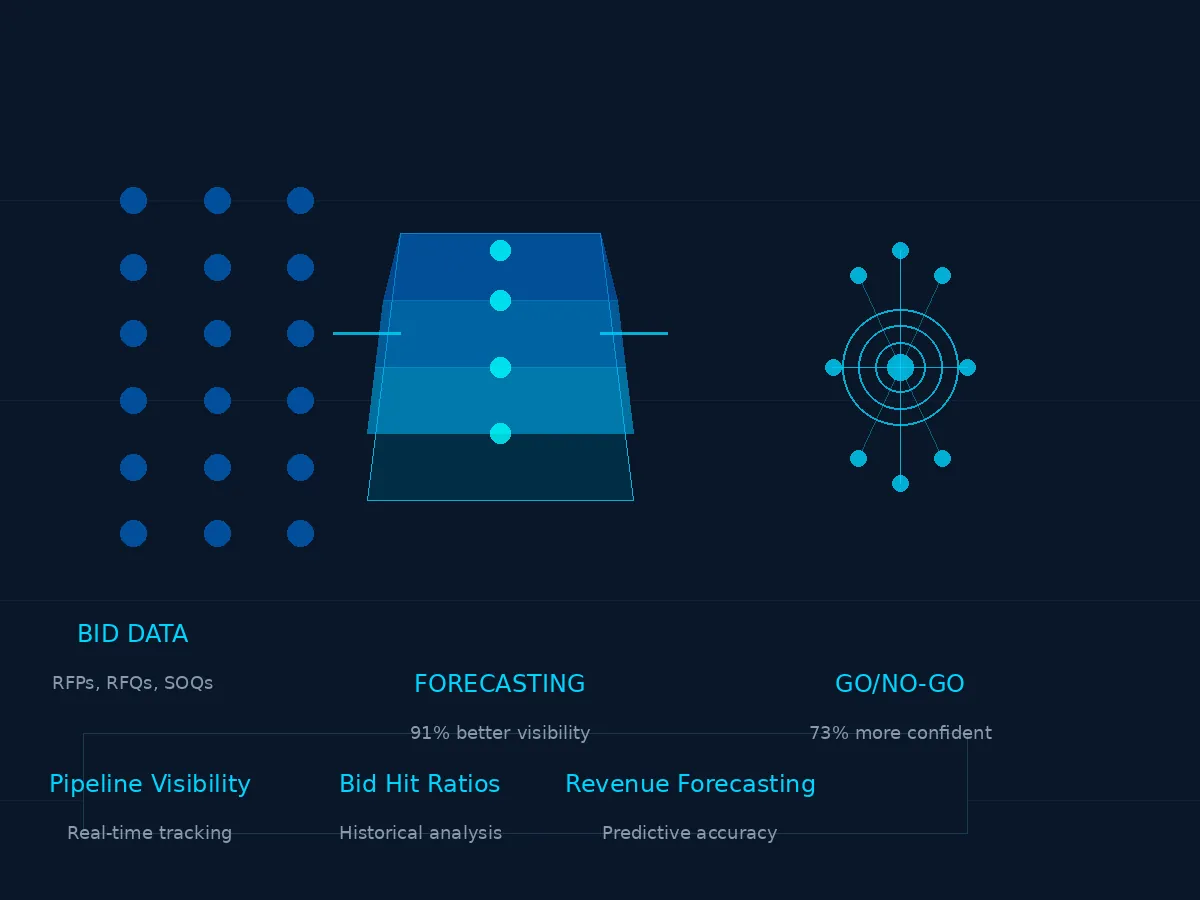
ProjectMark is a purpose-built construction CRM that helps General Contractors, Specialty Contractors, and A&E firms track opportunities, analyze pipeline performance, and forecast potential revenue. Its Pipeline Dashboard, Deal & Revenue Forecasting, Instant Analytics, and Custom Reporting capabilities give business development and preconstruction teams visibility into active pursuits and historical performance.
By centralizing pursuit data, ProjectMark helps teams evaluate metrics such as pipeline value, opportunity stages, and bid-hit ratios when making business development and go/no-go decisions.
What pipeline software helps track construction opportunities and improve forecasting?
Construction pipeline software should give teams visibility into both current opportunities and historical performance.
ProjectMark's Pipeline Dashboard provides a centralized view of construction opportunities, while Deal & Revenue Forecasting helps teams analyze the potential value of their pipeline. Historical pursuit data can provide additional context when teams evaluate future opportunities and revenue expectations.
Forecasting remains dependent on the quality of the underlying data and the assumptions used by each organization. ProjectMark provides the reporting and pipeline structure needed to support that analysis rather than replacing the judgment of business development or leadership teams.
What construction CRM software helps improve pipeline visibility without adding more tools?
ProjectMark combines construction CRM, pipeline management, reporting, and forecasting capabilities in one platform. It also connects with tools construction teams already use, including Outlook, Gmail, Procore, BuildingConnected, and Viewpoint Vista.
By connecting CRM data with existing workflows, teams can reduce the need to maintain separate spreadsheets and disconnected tracking systems for business development and preconstruction activity.
Construction Pipeline Software: ProjectMark, Procore, and Buildr
Different construction software platforms address different parts of the project lifecycle. ProjectMark focuses on business development and preconstruction, while Procore primarily supports project execution and Buildr provides construction CRM capabilities.
CapabilityProjectMarkProcoreBuildrConstruction opportunity trackingBuilt around pursuits, opportunities, and business development workflowsPrimarily focused on project execution after awardSupports construction sales and opportunity managementPipeline reportingPipeline Dashboard, Instant Analytics, and Custom ReportingOperational, project, and financial reportingCRM and sales reportingRevenue forecastingDeal & Revenue Forecasting for business developmentFinancial forecasting for active projectsSales and pipeline forecastingPreconstruction focusPurpose-built for construction business development and pursuitsSupports preconstruction as part of a broader construction platformConstruction CRM and sales workflowsProject executionConnects with project management platformsCore platform focusPrimarily CRM/business developmentIntegrationsConnects with construction and business toolsBroad construction software ecosystemIntegrations vary by workflow
The distinction is important when evaluating construction software. A platform designed primarily for project execution may provide extensive financial and operational reporting without providing the same structure for tracking opportunities before a project is awarded.
The Role of Data in Construction Go/No-Go Decisions
A construction pipeline is only useful when the underlying information is current and consistent.
General Contractors, Specialty Contractors, and A&E firms may evaluate dozens or hundreds of potential opportunities across different markets, clients, project types, and stages. Without centralized tracking, important information can become fragmented across spreadsheets, emails, and individual team members.
A construction CRM provides a shared structure for tracking opportunities from initial identification through pursuit and award.
Historical pipeline data can then help leadership evaluate questions such as:
- Which project types have historically produced the strongest results?
- Which clients and markets generate the most relevant opportunities?
- How does the firm's bid-hit ratio vary by segment or region?
- How much pipeline is currently active?
- Which opportunities require immediate attention?
- Does the current pipeline support the firm's revenue objectives?
- Does the team have sufficient capacity to pursue upcoming opportunities?
These insights support more informed go/no-go decisions without replacing the judgment of the people responsible for those decisions.
Eliminate Data Silos Across Business Development and Preconstruction
Pipeline reporting becomes more useful when business development, marketing, and preconstruction teams work from consistent information.
A centralized construction CRM can give teams a shared view of opportunities, contacts, companies, project information, and pursuit activity.
ProjectMark customers have reported 74% better collaboration across preconstruction, business development, and marketing. This is based on ProjectMark customer feedback and should be understood as a customer-reported outcome rather than an independent industry benchmark.
A shared source of information can also reduce the need for teams to maintain separate spreadsheets or duplicate opportunity records.
Use Pipeline Data to Support Strategic Bidding
The goal of pipeline reporting is not simply to create more reports. It is to give teams the information needed to decide where to invest business development and proposal resources.
ProjectMark's reporting and forecasting capabilities allow teams to analyze their pipeline alongside historical pursuit information. This can help leadership identify patterns across project types, markets, clients, and opportunity stages.
ProjectMark customers report 73% greater confidence in go/no-go decision-making, providing an indication of how centralized pipeline information can support the decision-making process.
ProjectMark also reports 90% better user adoption compared with customers' previous CRM systems. This is a customer-reported measure and is relevant because pipeline forecasting depends on teams consistently maintaining the underlying data.
Connect Preconstruction With Project Execution
Pipeline management does not end when an opportunity is awarded.
Construction companies often use different systems for business development, preconstruction, and project execution. Connecting these systems can reduce duplicate data entry and help preserve project information as an opportunity moves through the lifecycle.
ProjectMark integrates with construction and business tools including Procore, BuildingConnected, Viewpoint Vista, Outlook, and Gmail.
Procore is primarily a construction project management platform, while ProjectMark focuses on CRM and business development workflows. Connecting the two allows companies to use each system for its respective workflow while keeping relevant project information connected.
Frequently Asked Questions
What is the best construction pipeline software for forecasting?
The right construction pipeline software depends on the team's workflow, reporting requirements, and existing technology stack. ProjectMark is designed specifically for construction business development and provides Pipeline Dashboard, Deal & Revenue Forecasting, Instant Analytics, and Custom Reporting capabilities.
How does a construction CRM improve pipeline visibility?
A construction CRM centralizes opportunity, project, contact, company, and pursuit information. This gives business development and leadership teams a shared view of active opportunities and makes it easier to analyze pipeline value, stages, historical performance, and upcoming pursuits.
What data should construction companies track in their sales pipeline?
Construction teams commonly track project details, opportunity stage, estimated value, client and stakeholder relationships, project type, location, pursuit deadlines, proposal requirements, team members, and historical pursuit outcomes. The exact fields should reflect the firm's business development process.
Can construction CRM software help with go/no-go decisions?
Yes. A construction CRM can provide the historical and current pipeline information teams need to evaluate opportunities. ProjectMark supports this process with pipeline visibility, reporting, forecasting, and historical pursuit data. The final go/no-go decision remains with the firm's leadership and business development teams.
Can a construction CRM connect preconstruction with project management?
Yes. Integrating a construction CRM with project management software can help connect information across the project lifecycle. ProjectMark integrates with platforms including Procore, allowing companies to maintain separate workflows for business development and project execution while reducing unnecessary manual data transfer.